Textile Machinery
Specially formulated oils for textile and fabric manufacturing equipment, safe for fibre contact and high-speed operation.
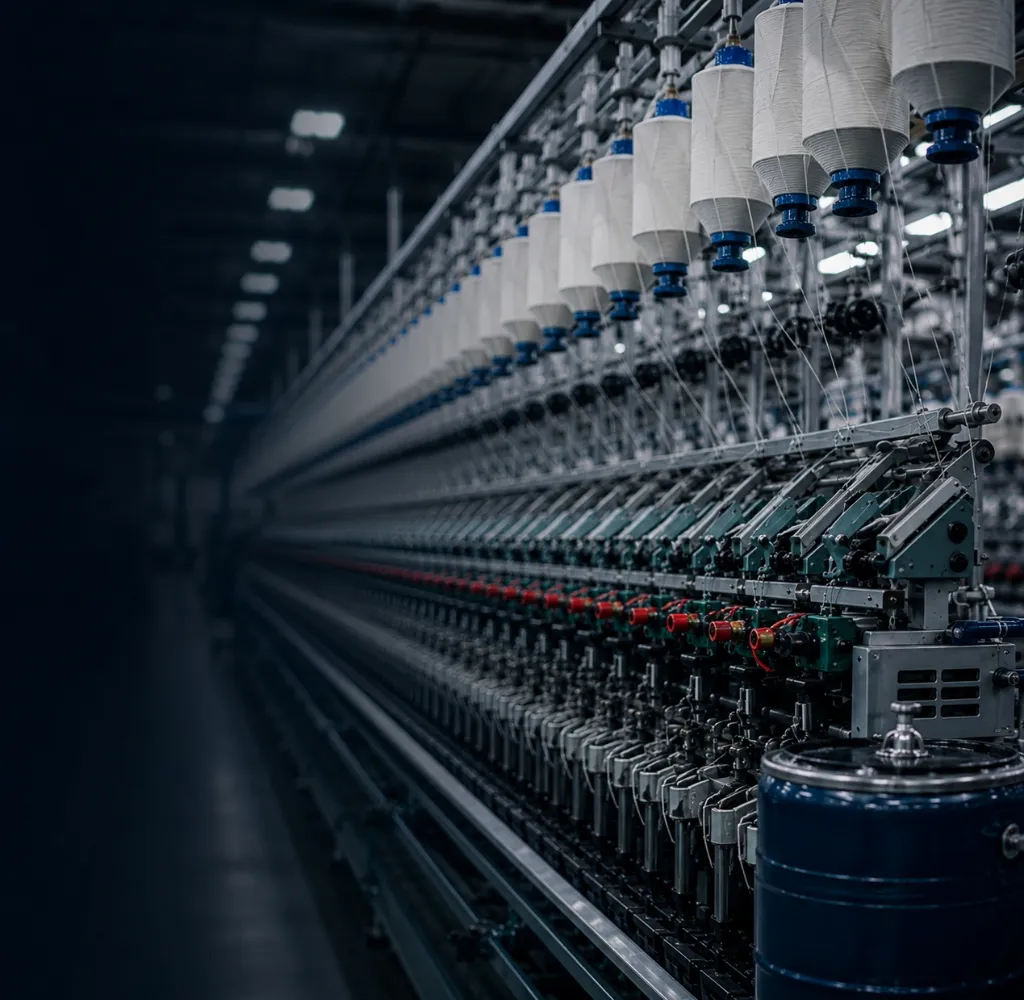
Textile applications need clean lubrication, low staining tendency, and reliable protection across continuous operation.
Loom Oil
Oils for loom mechanisms that need dependable film strength and clean operation around fabric.
Washable Knitting Oil
High-scourability needle and sinker oils designed to wash out completely from knitted fabric during scouring.
Non-Washable Knitting Oil
High-performance lubricants for specialized knitting setups where fabric washout is handled separately.
Spindle Oil
Light oils for high-speed spindles where smooth running, low heat, and cleanliness are important.
Synthetic Gear Oil
Fully synthetic gear lubricants designed to withstand continuous heat and high loads in texturizing and loom gearboxes.
Gear Oil
Extreme pressure mineral-based gear oils for high-load loom drives and industrial textile reducers.
Understanding Textile Machinery Lubrication
Learn why scourability, high-speed heat dissipation, and antistatic properties are critical to achieving defect-free textile production.
Key Selection Parameters
Fabric manufacturing machinery runs at immense speeds, demanding specialized non-staining lubrication:
-
Washability (Scourability) Because lubricants run close to yarns and fabrics, splashes are inevitable. Textile oils must be highly scourable, meaning they wash out completely during standard fabric scouring processes, avoiding permanent yellow stains.
-
Viscosity & Needle Temperature Control Knitting needle/sinker speeds produce intense localized heat. Very light viscosity oils are required to lubricate close tolerances and pull heat away, preventing needle binding and wear.
-
Oxidation & Sludge Resistance Oils must not oxidize, polymerize, or leave sticky dark varnishes under heat. Sticky residues attract dust and cause needles to stick, leading to fabric defects like drop-stitches.
-
Antistatic & Friction Properties High-speed fiber movement generates significant static electricity. Antistatic additives help dissipate charges, reducing the amount of airborne lint and fluff that sticks to the lubricated parts.
Looking for loom, knitting, or spindle oil?
Share the machine make, speed, and fabric contact concern for a practical recommendation.