Metalworking Fluids
Fluids used when cutting, shaping, forming, or heat treating metal to reduce heat, control friction, and protect the workpiece.
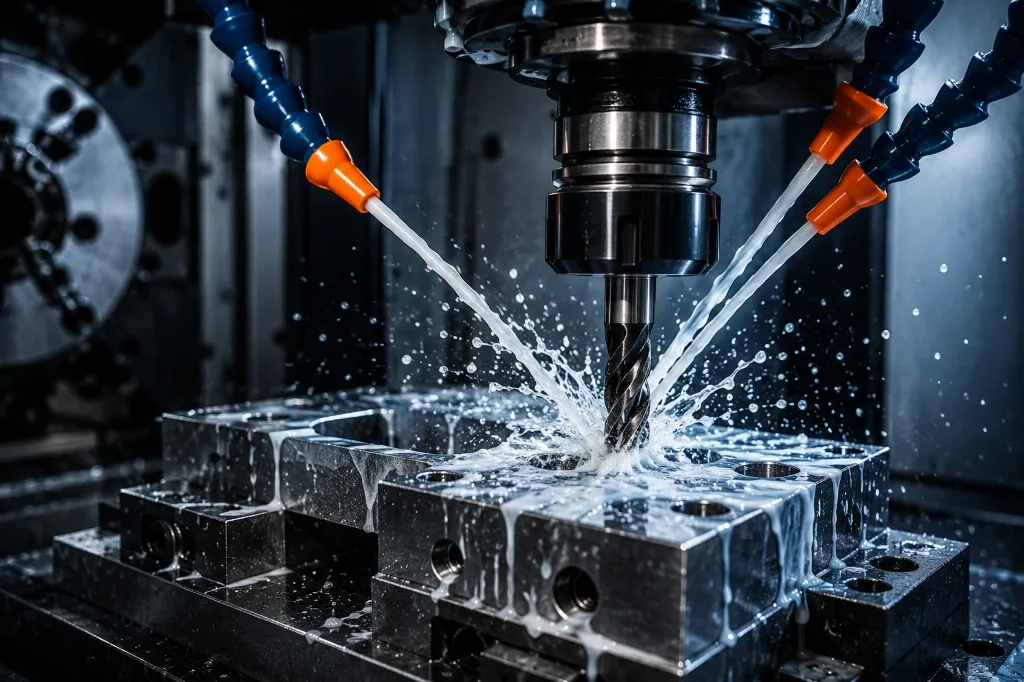
Choose the fluid by machining operation, material, finish requirement, heat, and corrosion protection needs.
Soluble & Semi-Synthetic Cutting Oils
Water-mix cutting fluids for machining, turning, milling, and grinding where cooling, corrosion protection, and sump life matter.
Quenching Oils
Heat-treatment oils for controlled cooling, hardness development, and reduced distortion during metal hardening operations.
Neat Oils
Straight cutting oils for tapping, broaching, deep drawing, and difficult machining where high lubricity is required.
Forging & Forming Oils
Lubricants for forging, stamping, bending, and forming operations to reduce scoring, die wear, and friction under pressure.
Understanding Metalworking & Forming Fluids
Learn how to select between cooling-focused and lubrication-focused fluids, manage workpiece chemical compatibility, and optimize tool life.
Key Selection Parameters
Metal cutting, drawing, and rolling operations rely on specialized fluid chemistry to handle severe friction and heat:
-
Cooling vs. Lubrication Balance Water-soluble coolants excel at pulling heat away from high-speed cutting zones. Neat (straight) oils provide extreme lubricity under slow, high-pressure operations like thread tapping or deep drawing.
-
Workpiece Material Compatibility Additives like active sulfur improve steel cutting but stain and tarnish yellow metals (copper, brass, bronze). Special non-active formulations are required for aluminum and yellow metals.
-
Bacterial & Bio-Resistance Water-mix coolants can breed bacteria and fungi, leading to foul odors ("Monday morning smell") and fluid splitting. Biostatic formulations resist microbial growth and extend sump life.
-
Extreme Pressure (EP) Film Strength For stamping, drawing, and rolling, the fluid must form a high-strength chemical barrier that survives extreme pressure. This prevents metal-to-die adhesion, scoring, and cracks.
Need the right fluid for machining or forming?
Tell us your material, operation, and finish concern and we will shortlist options.