Specialty Lubricants
Application-specific oils, greases, and protective compounds for demanding plant conditions where standard lubricants are not enough.
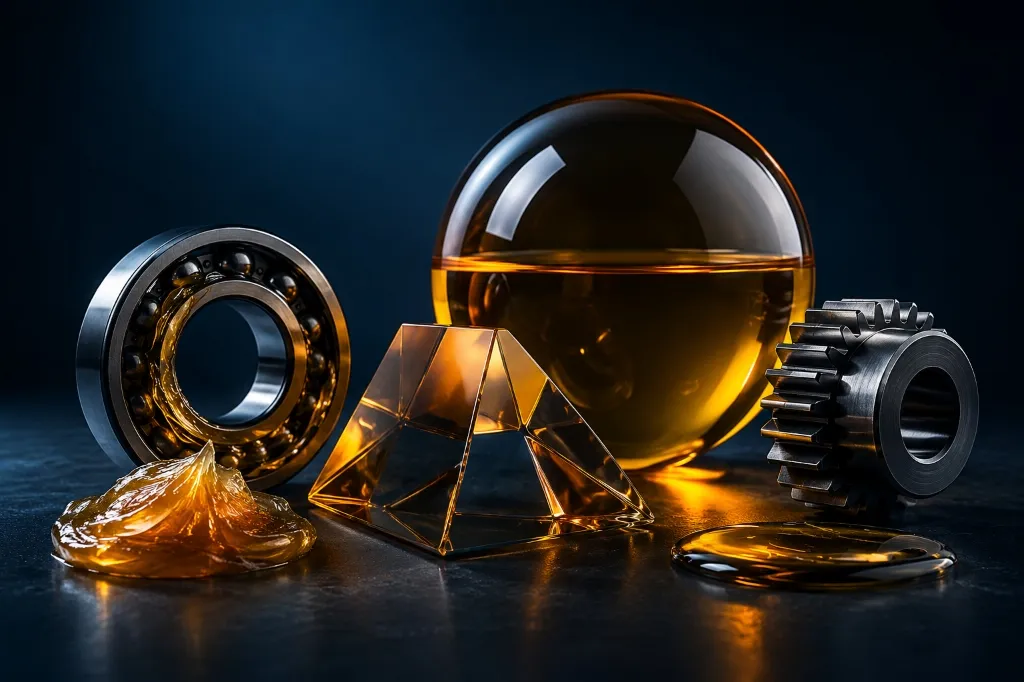
Specialty lubricant selection depends on exposure to corrosion, food-safety requirements, temperature, electrical insulation, load, and relubrication practice.
Rust Protection Oils
Protective oils and films for machined parts, tools, components, and stored metal surfaces exposed to humidity or handling.
Food Grade & Silicone Lubricants
Specialty lubricants for food-processing equipment, rubber and plastic compatibility, clean operation, and non-staining applications.
Anti-Seize & Dielectric Greases
Compounds for threaded assemblies, electrical contacts, insulating applications, and parts exposed to heat, moisture, or seizure risk.
Specialty Industrial Greases
High-performance greases for heavy load, water exposure, high temperature, slow speed, and difficult industrial bearing applications.
Understanding Specialty Lubricants
Learn how to select protective oils, food-grade lubricants, dielectric compounds, anti-seize pastes, and specialty greases for demanding plant conditions.
Key Selection Parameters
Choosing the correct specialty lubricant requires matching the product chemistry to the risk you are trying to control:
-
Application Exposure Identify whether the main challenge is rust, washdown, food-zone contact, high temperature, electrical insulation, or heavy load before choosing the lubricant family.
-
Compatibility Requirements Food-grade and silicone lubricants must be compatible with seals, plastics, rubber, and process requirements. Electrical applications need products that preserve insulation performance.
-
Protection Duration Rust preventive oils and protective films should be selected by indoor or outdoor storage, handling frequency, required film type, and expected protection period.
-
Load, Temperature & Additives Anti-seize compounds and industrial greases need suitable solid lubricants, EP additives, and thickener systems for heat, shock load, water exposure, and long relubrication intervals.
Choosing a specialty lubricant?
Our team can help match rust protection, food-grade, dielectric, anti-seize, or grease options to the application and service conditions.